
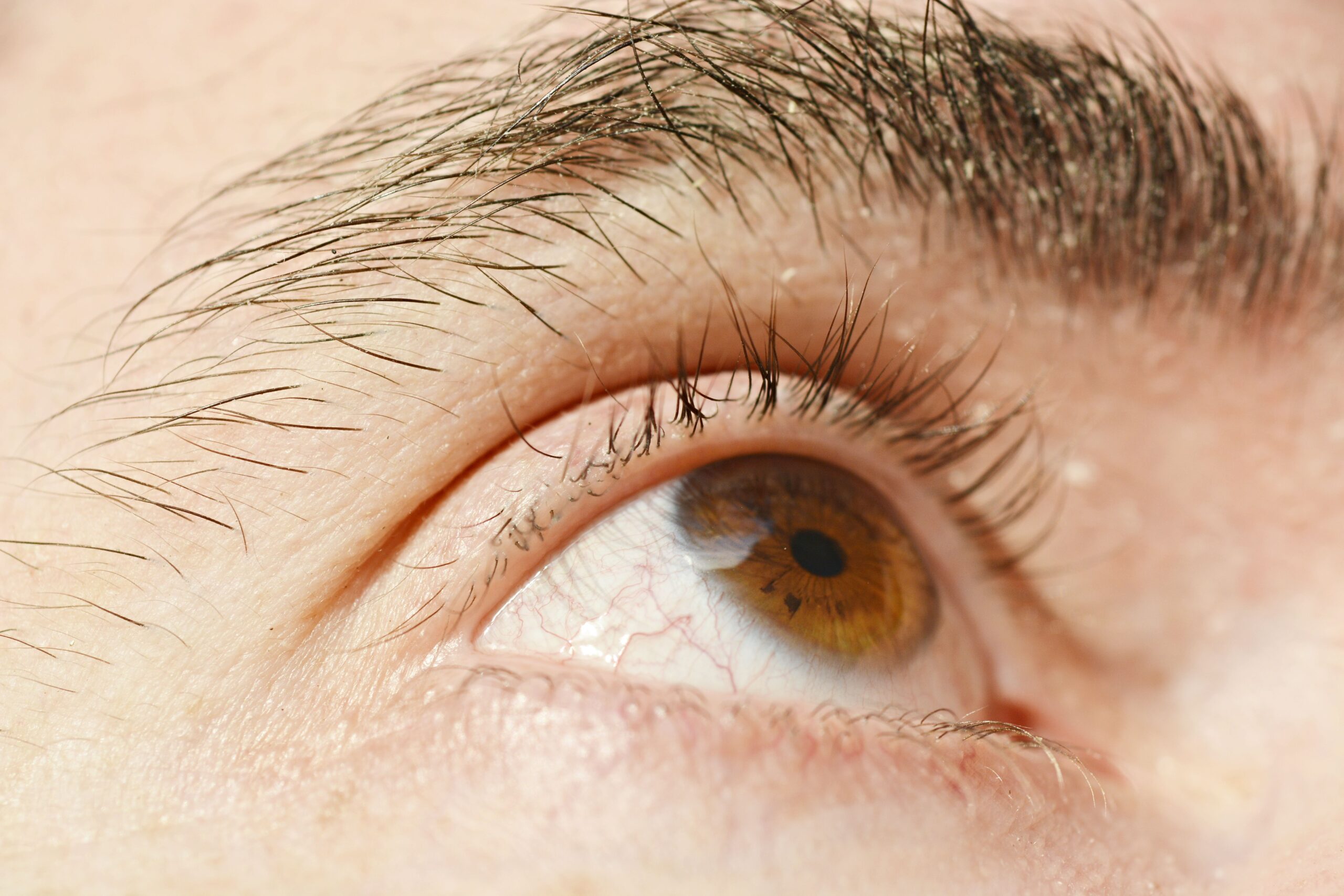
What Are the Symptoms of Dry Eye?
Dry eye is one of the most common conditions eye doctors see — and one of the most misunderstood. Here's what's actually happening in your eyes, and how to recognize it early.
What Is Dry Eye?
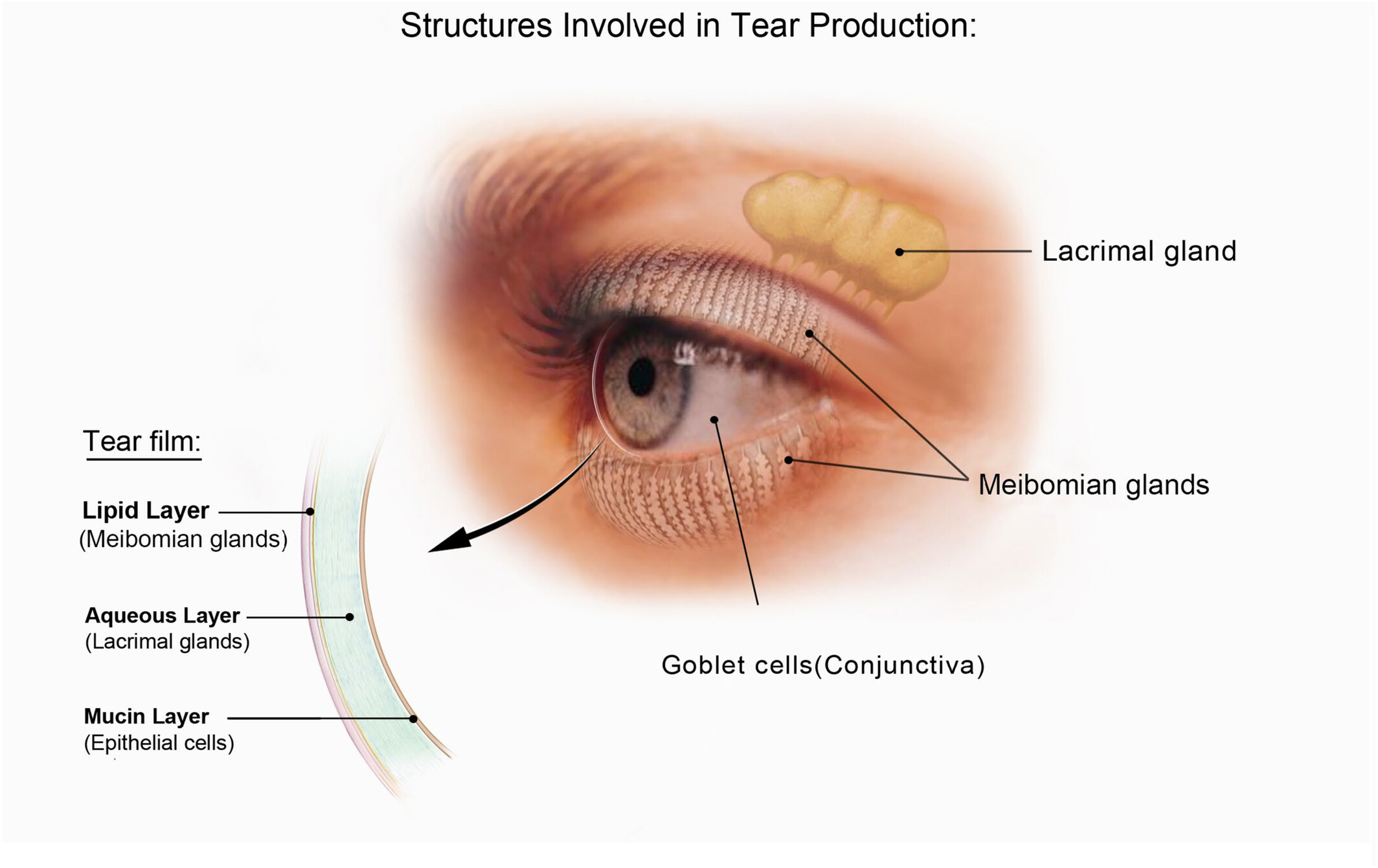
Dry eyes are caused by a variety of factors that disrupt a healthy tear film. Your tear film is made up of three layers — fatty oils, aqueous fluid, and mucus — that work together to keep the surface of your eyes lubricated, smooth, and clear.
For some people, this process doesn't provide enough lubrication, and dry eye develops. The tears produced can be inadequate for many reasons, but the end result is the same: tear instability that leads to inflammation and damage of the eye's surface.
The outermost, oily layer formed by the meibomian glands. It prevents tear overflow, slows evaporation, and lubricates the eyelids when you blink. Dysfunction here causes evaporative dry eye.
The middle layer and the bulk of the tear film, secreted by the lacrimal glands. When these glands don't secrete enough, dry eye follows.
The innermost and thinnest layer, made of goblet and epithelial cells. It allows the aqueous layer to adhere evenly to the cornea's surface.
Common Symptoms
Dry eye symptoms are often easy to notice once you know what to look for:
Two Types of Dry Eye
Not all dry eye is the same — the two main types are caused by different breakdowns in the tear film.
Tears evaporate too quickly, usually because the meibomian glands — the oil-producing glands of the eyelid — aren't working properly and can't slow tear evaporation the way they should.
The lacrimal glands don't produce enough of the watery, aqueous component of tears — the layer that makes up the bulk of the tear film.
- ✓ Use over-the-counter eye drops
- ✓ Take regular breaks during prolonged screen use
- ✓ Avoid exposure to smoke
- ✓ Use artificial tears regularly
- ✓ Practice conscious, full blinking
- ✓ Apply a warm compress to the eyes
Treatment Options at Florida Eye
Our specialists at Florida Eye Specialists & Cataract Institute recommend treatment based on the cause and severity of your dry eye, starting with non-surgical relief and moving to advanced, in-office therapies when needed.
Non-surgical options like preservative-free artificial tears, moisturizing ointments, and increased humidity at home or work are often the first line of relief.
These help your eyes produce more of their own tears by reducing the underlying inflammation that's disrupting your tear film.
Intense Pulsed Light therapy targets the root cause of Meibomian Gland Dysfunction (MGD) by focusing light pulses into the glands, breaking up the hardened oils that block healthy tear production. Treatment takes about 15 minutes, with a series of four sessions typically recommended.
A precise in-office procedure that gently exfoliates the eyelid margins, removing debris and buildup associated with blepharitis. It's often paired with IPL or gland expression for maximum relief.
For patients with more complex corneal conditions, scleral lenses hold a reservoir of fluid against the eye, protecting the surface and providing lasting comfort throughout the day.
Our practice includes many dry eye specialists ready to help you find lasting relief. Call 813-829-1236 or visit floridaeye.org to schedule an appointment at one of our seven Tampa Bay area locations.